Marketing de influencia Acercamientos teóricos, antecedentes y situación actual
Barra lateral del artículo
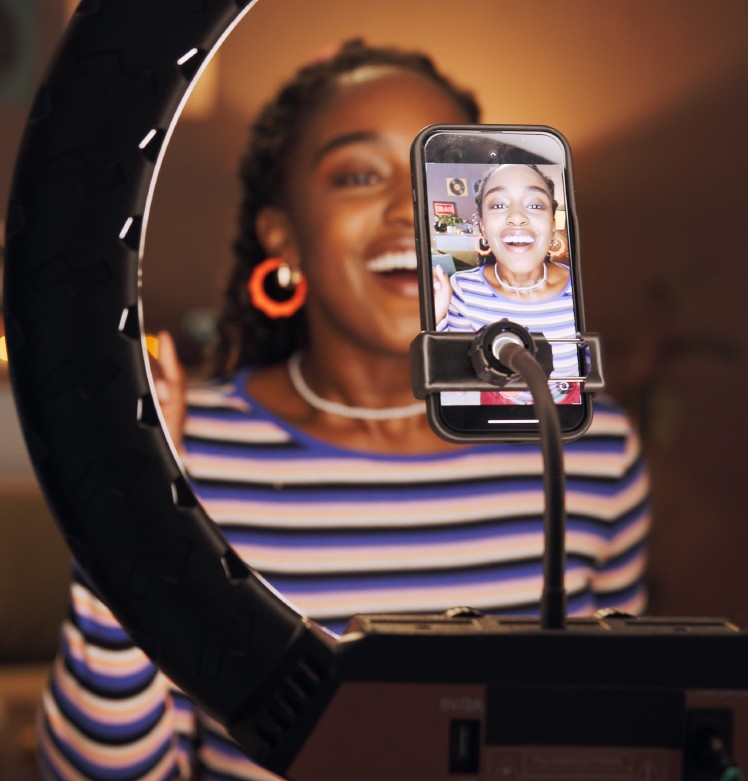
Contenido principal del artículo
Resumen
El artículo examina el Marketing de influencia como una práctica comunicativa central en los entornos digitales mediados por plataformas, donde la circulación social de contenidos redefine los vínculos entre marcas, audiencias y tecnologías. Su objetivo es analizar los antecedentes históricos y los principales enfoques teóricos que permiten comprender la configuración actual de esta práctica dentro de la cultura digital.
A partir de una revisión de literatura académica y profesional publicada entre 2005 y 2025, el estudio identifica la influencia de los enfoques sobre liderazgo de opinión, eWOM, economía de la atención y Marketing de contenidos. Los hallazgos evidencian que el Marketing de influencia trasciende su carácter promocional y se configura como una práctica comunicativa situada, en la que la autenticidad percibida, la afinidad relacional y la visibilidad operan como capitales simbólicos relevantes para comprender los procesos contemporáneos de consumo y mediación tecnosocial.
Detalles del artículo
Sección

Esta obra está bajo una licencia internacional Creative Commons Atribución-NoComercial-SinDerivadas 4.0.
Cómo citar
Referencias
Abidin, C. (2018). Internet celebrity: Understanding fame online. Emerald Publishing.
Altimeter Group & Traackr. (2017). Influence 2.0: The future of influencer marketing. Altimeter Group.
Baudrillard, J. (2009). La sociedad de consumo. Siglo XXI Editores.
Blanco, C. (2016). Publicidad y cultura digital. Editorial UOC.
Boerman, S. C. (2020). The effects of the standardized Instagram disclosure for micro-and meso-influencers. Computers in Human Behavior, 103, 199-208. https://doi.org/10.1016/j.chb.2019.09.015
Brown, D., & Fiorella, S. (2013). Influencer marketing: How to create, manage, and measure brand influencers. Que Publishing.
Brown, D., & Hayes, N. (2017). Influencer marketing: Who really influences your customers? Routledge.
Castelló-Martínez, A. (2016). El marketing de influencia: un caso práctico. En I. Zacipa-Infante, V. Tur-Viñes, & J. Segarra-Saavedra (Eds.), Tendencias publicitarias en Iberoamérica: diálogo de saberes y experiencias (pp. 49-65). Grupo de Investigadores COMPUBES. https://doi.org/10.14198/MEDCOM/2016/8
Castelló-Martínez, A., & Del Pino-Romero, C. (2015). La comunicación publicitaria con influencers. Redmarka: Revista Académica Red de Marketing Aplicado, 8(14), 21-50. https://doi.org/10.17979/redma.2015.01.014.4880
Chaffey, D., & Ellis-Chadwick, F. (2015). Digital marketing: Strategy, implementation and practice (6th ed.). Pearson.
CICOM (Centro de Investigación en Comunicación de la Universidad de Costa Rica). (2024). Nuestras apps de cada día 2024. Universidad de Costa Rica.
Djafarova, E., & Rushworth, C. (2017). Exploring the credibility of online celebrities’ Instagram profiles in influencing the purcha¬se decisions of young female users. Computers in Human Behavior, 68, 1-7. https://doi.org/10.1016/j.chb.2016.11.009
El Financiero & Shift Porter Novelli. (2024). RED506: VIII edición. Grupo Nación.
El Financiero & Shift Porter Novelli. (2025). RED506: VIIII edición. Grupo Nación.
Freberg, K., Graham, K., McGaughey, K., & Freberg, L. A. (2011). Who are the social media influencers? A study of public percep¬tions of personality. Public Relations Review, 37(1), 90-92. https://doi.org/10.1016/j.pubrev.2010.11.001
IAB Spain. (2024). Estudio anual de redes sociales 2024. Asociación de la Publicidad, el Marketing y la Comunicación Digital en España. https://iabspain.es/estudio/estudio-de-redes-sociales-2024/
Katz, E., & Lazarsfeld, P. F. (1955). Personal influence: The part played by people in the flow of mass communications. Free Press.
Kotler, P. (2002). Dirección de marketing. Pearson Educación.
Litvin, S. W., Goldsmith, R. E., & Pan, B. (2008). Electronic word-of-mouth in hospitality and tourism management. Tourism Management, 29(3), 458-468. https://doi.org/10.1016/j.tourman.2007.05.011
Marwick, A. E. (2015). Status update: Celebrity, publicity, and branding in the social media age. Yale University Press.
Núñez, V. (2014). Qué es el Marketing de influencia y cómo funciona. VILMA. https://vilmanunez.com/marketing-de-influencia/
Procomer (Promotora del Comercio Exterior de Costa Rica). (2023). Informe sobre tendencias del marketing digital en Costa Rica. PROCOMER.
Ramos, J. (2018). Marketing de influencia: Estrategias y beneficios para las marcas. Editorial ESIC.
Reason Why. (2024). Las características de un influencer eficaz. https://www.reasonwhy.es/buscador/Las%20caracter%C3%ADsticas%20de%20un%20influencer%20eficaz
Rosato, N. E. (2021). Nuevas estrategias de comunicación organizacional: los influencers. Editorial Gedisa.
Sanmiguel Arregui, P. (2020). Influencer marketing. ISEM Fashion Business School.
Sanz, A., & Fernández, M. (2018). Generadores de contenido y marketing de influencia. Universidad Complutense de Madrid.
Scolari, C. (2018). Las leyes de la interfaz: Diseño, ecología y evolución tecnológica. Editorial Gedisa.
Solís, B. (2015). The influencer marketing manifesto: Why the future of influencer marketing starts with people and relationships, not popularity. Altimeter Group.
Statista. (2025). E-commerce market size in Latin America 2023-2025. https://es.statista.com/
Uzunoğlu, E., & Kip, S. M. (2014). Brand communication through digital influencers: Leveraging blogger engagement. International Journal of Information Management, 34(5), 592-602. https://doi.org/10.1016/j.ijinfomgt.2014.04.007
Woods, S. (2016). #Sponsored: The emergence of influencer Marketing. University of Tennessee. https://trace.tennessee.edu/cgi/viewcontent.cgi?article=3010&context=utk_chanhonoproj